
What is the RTM process?
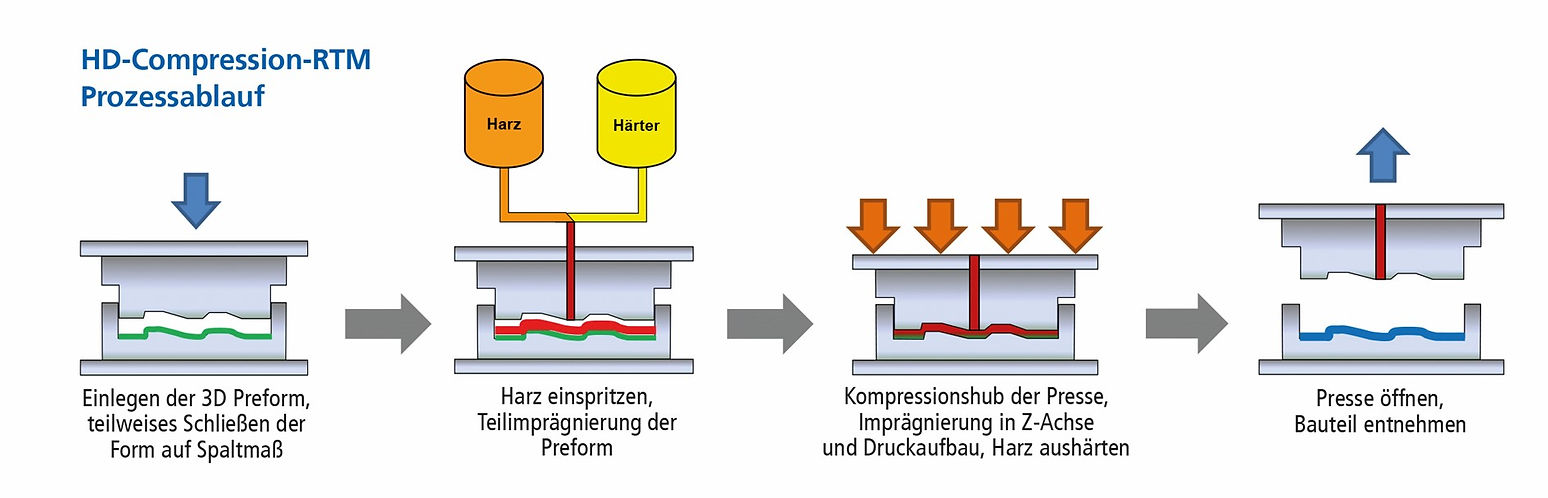
In the RTM process , a fiber preform (3D preform) is placed into a closed mold (tooling) and then infiltrated under pressure with a liquid resin system. The curing of the resin creates a strong, lightweight, and structurally rigid component. Typical fiber materials used in the RTM process are glass or carbon fibers (CFRP components). Resin systems can consist of epoxy, polyester, or vinylester resins, depending on the specific requirements of the end product.
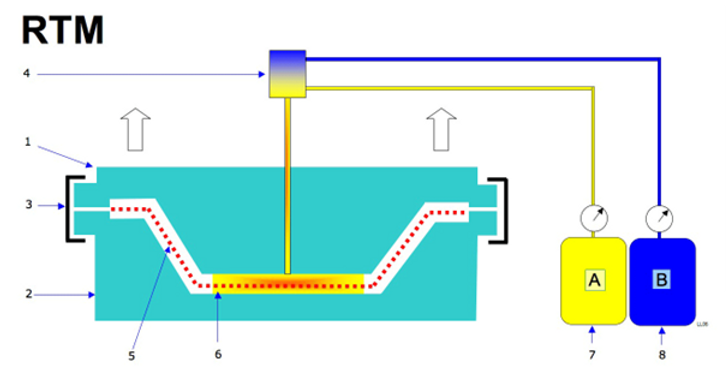
The RTM Process Workflow
Preparation of the Mold and Reinforcement Materials: First, the mold is prepared and coated with a release agent to ensure easy demolding. The reinforcing fibers are placed into the mold as mats or fabrics, which will strengthen the final component.
Closing the Mold and Applying Vacuum: The mold is closed, and a vacuum is applied to ensure even resin distribution and prevent air inclusions.
Resin Injection: The resin is injected into the mold and distributes evenly due to the vacuum. It fully saturates the fiber structure and reaches even hard-to-access areas.
Curing: After complete infiltration, the resin cures at room temperature or in an oven, depending on the materials and requirements used.
Demolding and Post-Processing: After curing, the component is removed from the mold and can be post-processed or painted if necessary, to prepare it for final use.
The Advantages of the RTM Process for CFRP Components
Low Costs: The Resin Transfer Molding (RTM) process enables cost-effective production of fiber composite components, as it requires less material and energy compared to other manufacturing processes.
High Strength: By using high-strength fibers such as glass fibers or carbon fibers in combination with a resin, components with high strength and stiffness can be produced.
Complex Geometries: The RTM process enables the production of components with complex geometries and thin wall thicknesses that are difficult to achieve with other methods
Lightweight: Fiber composite components produced using the RTM process are lighter than comparable metal components, leading to a reduction in the overall product's weight
Good Surface Quality: The RTM process allows for the production of components with a high-quality surface finish that requires no post-processing
Environmental Friendliness: The RTM process is more environmentally friendly than other manufacturing methods, as it generates less waste and consumes less energy
Scalability: The RTM process can be used for manufacturing components ranging from small to large, making it particularly flexible in application
Challenges in the RTM Process:
RTM Tooling:
Developing suitable tooling presents another challenge:
- Precision: Tools must guarantee high contour accuracy and surface quality.
- Stability: They must withstand injection pressure and exhibit sufficient clamping force and rigidity.
Temperature Management: Precise control and uniform distribution of temperature within the mold are essential for optimal resin curing.
Gating System: In addition to the positioning and design of injection points, further improvements can be achieved through gap impregnation or gap injection- Sealing: A critical factor for the quality and service life of the tools
Venting: Vent channels must be carefully planned to avoid air pockets and ensure complete cavity filling.- Efficiency: Fast opening and closing mechanisms are required to enable short cycle times.
Integrated Sensors: Modern RTM tools can be equipped with sensors that monitor pressure, temperature, and resin flow front in real-time.
.jpeg)
Automation of Resin Transfer Molding:
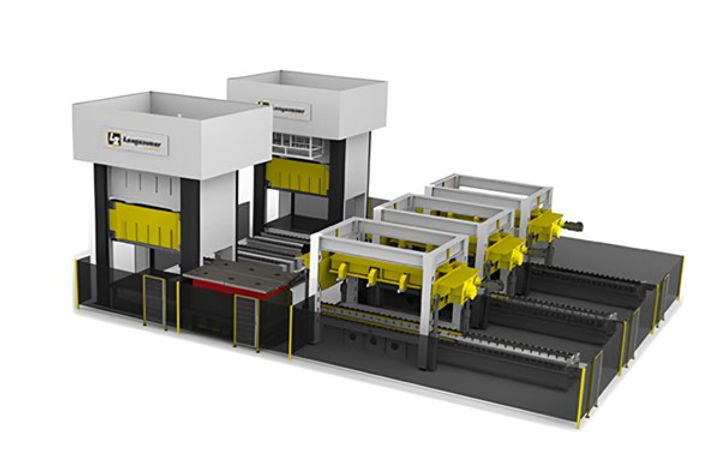
The implementation of automation solutions is important for cost-effectiveness, but also presents challenges:
- Complexity: Integrating various process steps into an automated production line can be technically challenging.
- Flexibility: Automated systems must be flexible enough to process various component geometries and sizes
Quality Assurance
The development of effective quality control methods is crucial:
- In-line Testing: Implementing testing procedures directly integrated into the production process can be challenging.
Defect Detection: The reliable detection of defects such as pores or delaminations is critical for component quality.
Addressing these challenges requires careful planning and continuous optimization of the RTM process. By tackling these issues, RTM technology can unleash its full potential for the economical series production of high-quality fiber composite components.
Conclusion
The Resin Transfer Moulding process is an innovative and efficient method for manufacturing fiber-reinforced components, particularly distinguished by its high precision, stability, and environmental benefits. Thanks to its versatile applications and the ability to optimize weight and strength, the RTM process has a promising future in various high-tech industries.
Delve deeper into the topic on the relevant section pages:




.avif)
